
Impact of Wars on Financial Markets
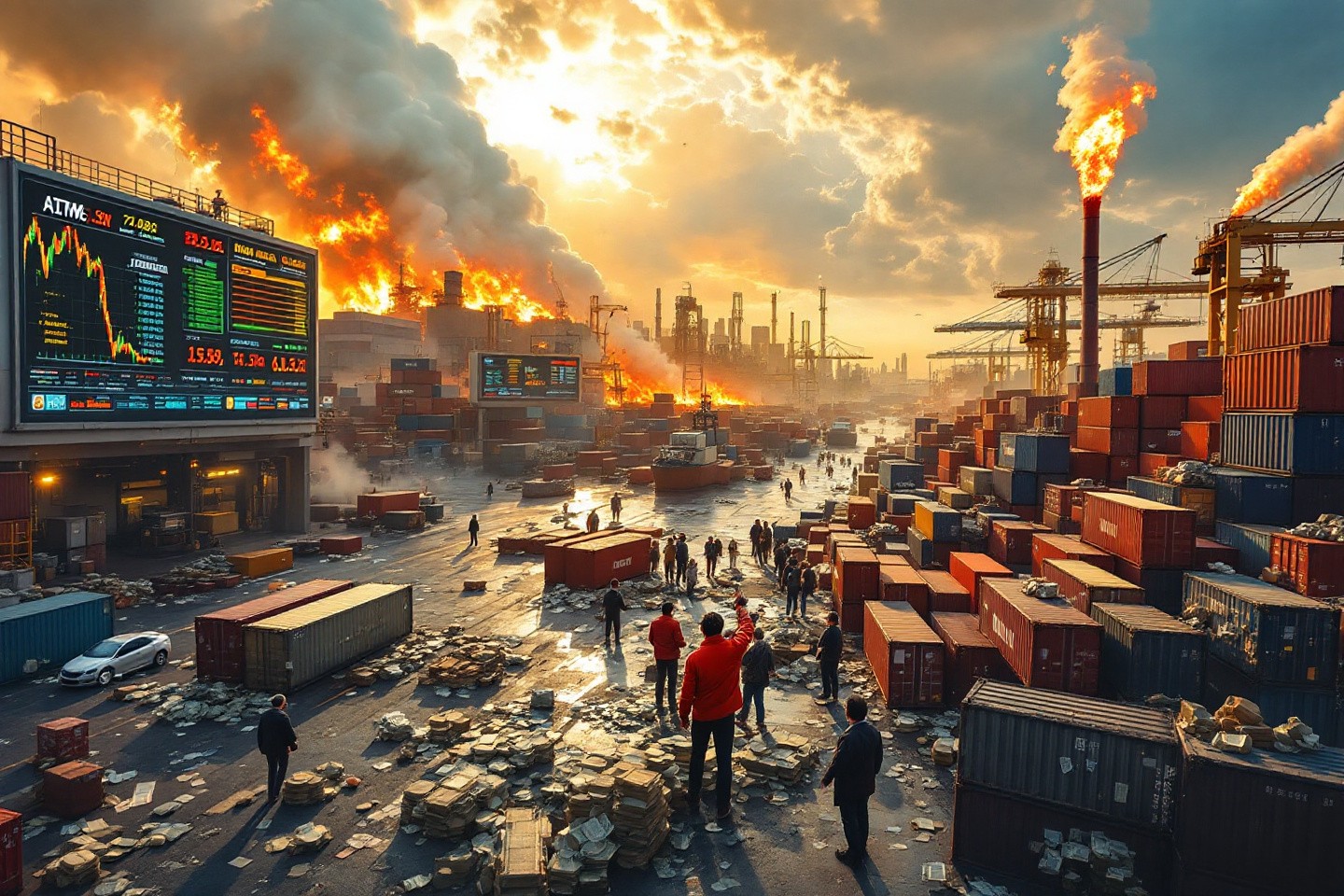
Global conflicts often trigger volatility in stock markets, commodities, and currencies.
Financial markets are often described as sensitive barometers of global stability. They react not only to economic indicators such as inflation or interest rates but also to geopolitical events. Among these events, wars are perhaps the most disruptive. When conflicts arise, they create uncertainty, fear, and rapid shifts in investor behavior.
History has repeatedly shown that wars can shake global markets, reshape industries, and redefine economic priorities. Understanding how wars influence financial markets helps investors, policymakers, and everyday citizens grasp the complex relationship between geopolitics and economics.
The Immediate Market Reaction
When news of a war or military conflict breaks out, financial markets typically react almost instantly. Investors tend to move away from riskier assets such as stocks and shift toward safer investments. This reaction is largely driven by uncertainty because wars bring unpredictability to government policies, economic stability, and global trade.
Stock markets often experience sharp declines in the early stages of a conflict. Investors fear disruptions to businesses, supply chains, and international trade. Companies operating in affected regions may see their stock prices drop significantly because their operations are at risk.
At the same time, certain assets known as “safe havens” usually experience increased demand. Gold, government bonds, and stable currencies often rise as investors look for protection against volatility.
Economic Uncertainty and Investor Behavior
Wars create an environment where predicting economic outcomes becomes extremely difficult. Governments may impose sanctions, restrict trade, or increase military spending. These actions can reshape entire economies almost overnight.
For investors, uncertainty often leads to cautious behavior. Many prefer to hold cash or reduce exposure to risky assets until the situation becomes clearer. This cautious approach can lead to reduced trading activity and increased volatility in financial markets.
Media coverage also plays an important role. Continuous news updates about battles, sanctions, or diplomatic developments can amplify investor anxiety. Markets may react strongly even to rumors, causing sharp swings in prices.
Impact on Global Trade and Supply Chains
One of the most significant economic consequences of war is the disruption of global trade. Modern economies rely heavily on international supply chains for raw materials, manufacturing, and distribution.
When conflicts occur, trade routes may be blocked, transportation costs increase, and governments impose restrictions on exports and imports. These disruptions can create shortages of important goods such as energy, food, or industrial components.
For financial markets, this means certain industries can suffer greatly. Manufacturing companies that rely on imported materials may struggle to maintain production. However, companies that offer alternative supply chains or domestic production often benefit from these changes.
Rising Commodity Prices
Wars frequently lead to significant increases in commodity prices. Oil, natural gas, metals, and agricultural products often become more expensive when supply is disrupted or when geopolitical tensions threaten production regions.
Energy markets are particularly sensitive to conflict. If a major oil-producing region becomes unstable, global oil prices can rise rapidly. Higher energy prices affect transportation, manufacturing, and everyday consumer costs.
Agricultural markets can also be heavily impacted. Conflicts affecting major farming regions can lead to shortages of wheat, corn, and other staple foods. As a result, food prices may rise globally.
Government Spending and Economic Stimulus
Wars require enormous government spending. Military operations, equipment production, and logistical support demand vast financial resources. Governments often increase budgets dramatically during wartime.
This spending can stimulate certain sectors of the economy. Defense contractors, technology companies, and manufacturing industries involved in military production often experience significant growth during conflicts.
However, increased government spending also raises concerns about national debt and inflation. Financing war efforts often requires borrowing large sums of money, which may affect long-term economic stability.
Currency Market Volatility
Wars frequently cause large movements in currency markets. Countries directly involved in conflict may see their currencies weaken due to economic instability and declining investor confidence.
Investors often move their money to currencies considered safer or more stable. The US dollar and Swiss franc historically act as safe-haven currencies during global crises.
Historical Examples of War Impacting Markets
World War I
During World War I, financial markets experienced massive disruptions. Many stock exchanges temporarily closed to prevent panic selling. Governments redirected resources toward military production, fundamentally reshaping their economies.
World War II
World War II triggered large-scale industrial mobilization. While the war caused immense destruction, it also accelerated technological innovation and economic transformation that shaped markets for decades.
Russia–Ukraine War
The Russia–Ukraine conflict caused major volatility in energy and agricultural markets. Sanctions, supply disruptions, and geopolitical tensions led to spikes in oil, natural gas, and wheat prices worldwide.
Sector Winners and Losers
Not all industries respond to wars in the same way. Some sectors decline due to reduced consumer spending and disrupted supply chains, while others benefit from increased government demand.
Industries that may suffer:- Tourism and hospitality
- Airlines and international travel
- Luxury consumer goods
- Export-dependent manufacturing
- Defense and aerospace
- Energy production
- Mining and commodities
- Cybersecurity and defense technology
Long-Term Economic Consequences
Although wars initially create financial chaos, long-term economic effects can be more complex. Reconstruction efforts often stimulate economic growth through infrastructure development, manufacturing expansion, and technological innovation.
However, wars can also leave lasting damage. Countries that suffer extensive destruction may face decades of rebuilding and financial hardship. High national debt accumulated during war efforts can slow economic growth for years.
Lessons for Investors
For investors, wars highlight the importance of diversification and risk management. Markets can change rapidly when geopolitical tensions rise, making it risky to concentrate investments in a single sector or region.
Experienced investors focus on long-term strategies rather than reacting emotionally to short-term market panic. Historically, markets have shown resilience and eventually recover after geopolitical shocks.
Conclusion
Wars are among the most powerful forces shaping global financial markets. They create uncertainty, disrupt trade, shift government spending priorities, and cause significant volatility across asset classes.
Yet financial markets are remarkably resilient. While conflicts may cause immediate panic and economic disruption, markets adapt over time. New industries emerge, supply chains evolve, and investment opportunities shift.
For investors, the key lesson is understanding geopolitical risks and maintaining a disciplined strategy. By studying historical patterns and staying informed, investors can navigate even the most turbulent periods in global markets.
For further reading on global financial trends visit Investopedia and World Bank Economic Resources.